
Predictive maintenance is often described as the next step after preventive maintenance. Instead of scheduling work purely based on time, maintenance decisions are influenced by how assets are actually used.
In D365 Asset Management, predictive maintenance exists, but it works within very specific boundaries. Understanding those boundaries is critical. When teams assume the system does more than it actually does, predictive maintenance quickly becomes frustrating. When expectations are aligned, it can be extremely effective.
What Predictive Maintenance Means in D365
Predictive maintenance in D365 is counter-driven, not sensor-driven in real time.
The system evaluates asset counters, such as operating hours or cycles, and uses those values to forecast when maintenance should occur. It does not continuously stream or analyze sensor data. Instead, it works from registered counter values and looks at how those values change over time.
This makes predictive maintenance in D365 structured and controlled, but also more limited than some teams initially expect when comparing it to broader predictive maintenance systems.
The Role of Counters in Predictive Maintenance
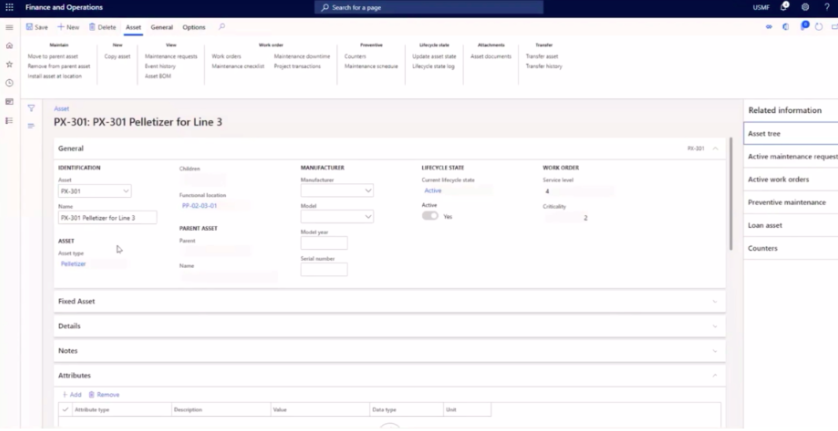
Counters are the foundation of predictive maintenance in D365. They represent measurable aspects of asset usage, such as:
- Operating hours
- Production cycles
- Run time
- Usage counts
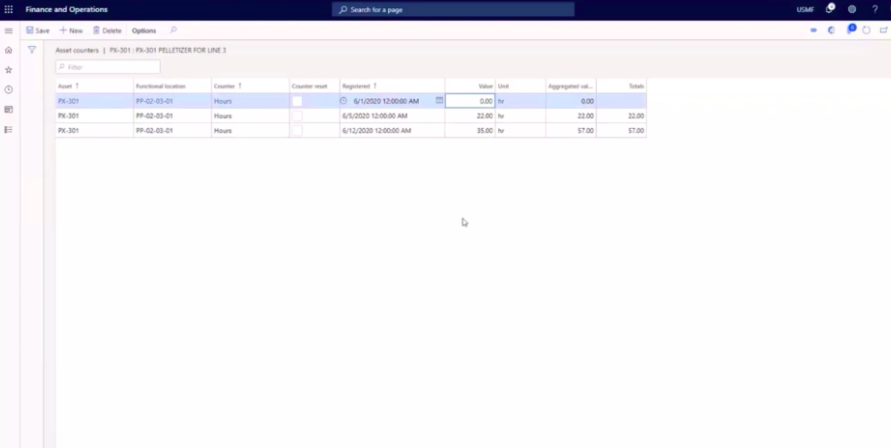
Counters are registered periodically, either manually or through integrations. Each registration updates the system’s understanding of how the asset is being used within the broader asset management framework.
What matters is not just the current counter value, but how that value changes over time.
Using Rate of Change to Forecast Maintenance
D365 evaluates predictive maintenance by looking at the rate of change of a counter.
For example, if an asset’s operating hours increase by a predictable amount each week, the system can estimate when a defined threshold will be reached. Maintenance can then be scheduled ahead of time, before the asset crosses that limit.
This approach works well when:
- Asset usage is relatively consistent
- Counters are registered regularly
- Thresholds are meaningful and stable
Predictive maintenance in D365 is not guessing. It is projecting forward based on historical usage patterns.
How Predictive Maintenance Is Defined in Maintenance Plans
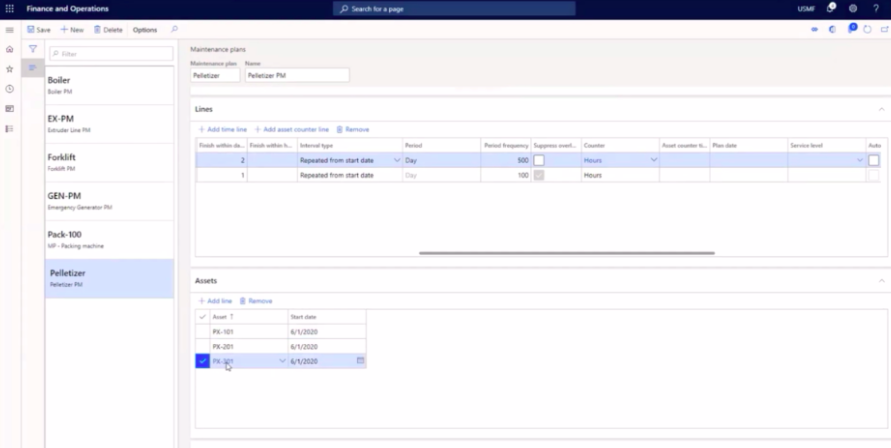
Predictive logic is configured within maintenance plans using counter-based lines.
These lines define:
- Which counter is evaluated
- The threshold value
- How often the system should check the counter
- Whether maintenance should be triggered based on forecasted usage
From a structure standpoint, predictive maintenance still relies on the same planning framework as preventive maintenance. The difference lies in how due dates are calculated.
What the System Does Not Do
This is where expectations often drift.
D365 does not evaluate predictive maintenance based on aggregated totals across multiple counters or assets. Each counter line is evaluated independently.
If multiple counter values exist, the system does not combine them to create a single predictive forecast. It looks at individual counter histories and trends.
This means:
- Predictive maintenance works best for clearly defined, single-measure use cases
- Complex, multi-variable predictions require external analytics or integrations
- D365 focuses on reliability and transparency rather than advanced data modeling
This limitation is not a flaw, but it is important to understand early in any asset management strategy.
How Forecasts Translate Into Maintenance Schedules
When predictive thresholds are forecasted to be reached, D365 does not immediately create work orders.
Instead, the system generates maintenance schedule lines, just as it does for preventive maintenance. These schedule lines represent predicted future maintenance events based on asset usage rather than time.
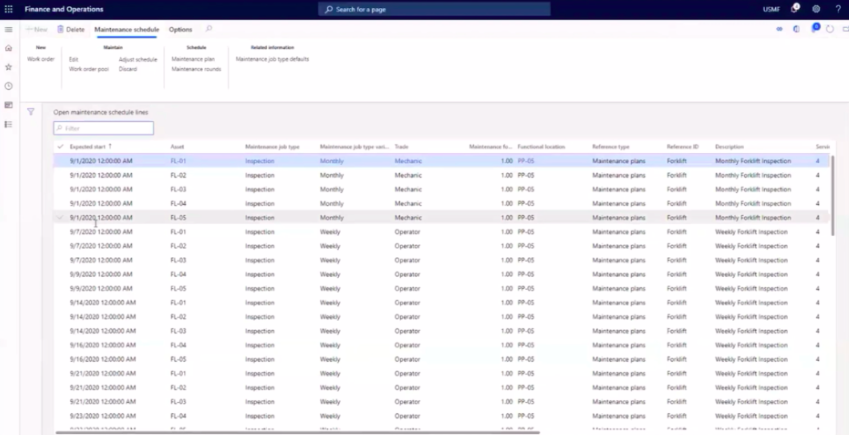
This keeps planning and execution separate, allowing teams to review, adjust, and bundle work before committing to execution.
When Predictive Maintenance Works Best
Predictive maintenance in D365 is most effective when:
- Asset usage is measurable and consistent
- Counters are updated regularly
- Maintenance thresholds are well understood
- The goal is forecasting, not automation for its own sake
In these scenarios, predictive maintenance reduces unnecessary work while still preventing failures.
When Condition-Based Maintenance Is a Better Fit
Predictive maintenance is about forecasting future work. In some situations, teams need immediate action when a specific condition is met, regardless of trends.
That is where condition-based maintenance becomes more appropriate. Instead of projecting forward, maintenance is triggered the moment a threshold is crossed, such as a temperature or pressure limit.
Understanding how D365 handles those real-time trigger scenarios requires looking at condition-based maintenance in practice .
Align Predictive Maintenance with What D365 Really Supports
Predictive maintenance in D365 can be powerful when expectations match system behavior. SysBrilliance works with teams to design counter strategies, thresholds, and forecasting models that align with how D365 evaluates usage trends, helping organizations avoid overengineering and misapplied automation.

Predictive Maintenance as a Planning Tool
In the context of D365, predictive features help teams plan ahead, not analyze live sensor data.
It helps teams:
- Anticipate future work
- Reduce unnecessary preventive maintenance
- Align maintenance timing with actual asset usage
When used with clear expectations, it provides meaningful value. When expected to behave like a real-time monitoring platform, it quickly disappoints.
The key is using predictive maintenance for what it is designed to do, and pairing it with condition-based maintenance or external systems where more complex behavior is required.
If you want to get real value from predictive maintenance in D365, contact SysBrilliance to build a setup that supports better planning, timing, and decision-making.